
WE do not have to look far to see all manner of great evil around us. We read stories of unimaginable violence in our home towns or neighboring cities. We read of terrible acts being done to women and children. We read of sensless killings and abuse we can not wrap our minds around. We read the stories of survivors of great abuse. Our own world history is chalked full of violence against humanity. What do we do when we are faced with the ralities of evil?
Sometimes we see things going on around us that are not right. That should not be happening in our world. We see things that are not just; things that go against the character of God. What should our conversation with God be like in these times? What should our prayer life look like when we see things in the world that are not right?
Let’s look at Psalm 12:
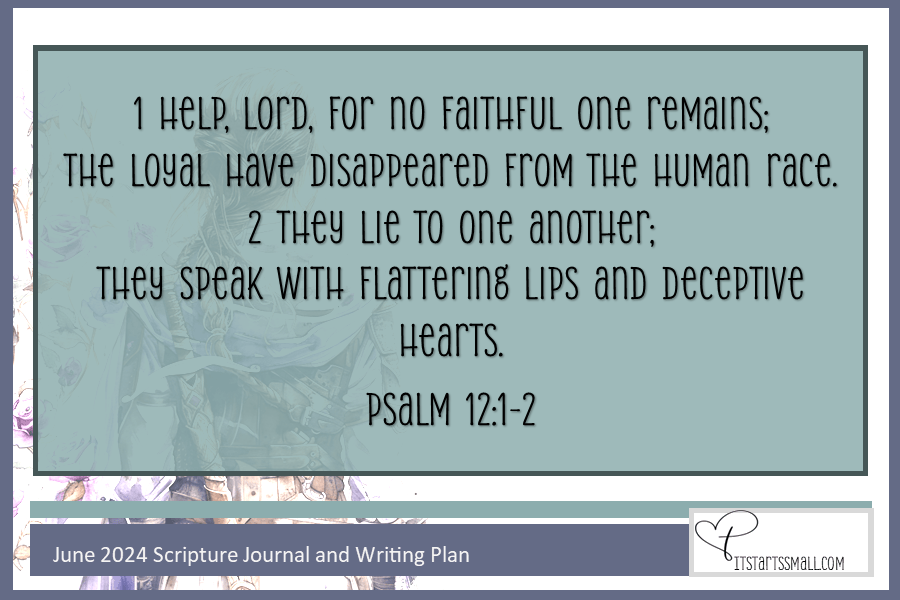
1 Help, Lord, for no faithful one remains;
the loyal have disappeared from the human race.
2 They lie to one another;
they speak with flattering lips and deceptive hearts.Psalm 12:1-2
This is the injustice David saw. This passage was written by David, who became the king of Israel after being a shepherd boy when he was growing up. We are not exactly sure when David wrote this Psalm but it may have been when he was trying to stay alive because King Saul was trying to kill him. Saul had lied about David to manipulate the leaders, then in return, the people were lying to Saul. The whole thing was a big mess. It could also be possible that David could have written this during his son Absalom’s rebellion. Absalom had seduced Israel with his lies and staged a military coup that was marked by things like espionage, betrayal and misdirection. Whatever the reason, David was really struggling to cope with what was going on.
Psalm 12 is a “lament Psalm.” When we speak honestly to God about the things that are not going well in our lives, we call that a lament. Mark Vroegop who writes:
A lament is a prayer in pain that leads to trust. Laments are more than merely the expression of sorrow. The goal of a lament is to recommit one’s self to hoping in God and believing His promises. It is a godly response to pain, suffering and injustice.
Weep With Me, Mark Vroegop
I love that. Let me repeat the beginning of that. “A lament is a prayer in pain that leads to trust.” David calls out to God, turning to the Lord. This is a prayer In which he shares his honest perspective on the situation.
As usual in these lament Psalms, the psalmist describes the situation. In this situation, the particular kind of lies that are going on are lies of flattery—lies of insincere speech or a double heart which manipulate others for the sake of gain. In such an environment, the godly and the faithful become so rare that it seems as if they have disappeared, either because they have been suppressed or because they’ve been seduced into lying themselves.
As David shares his hardship with God, he prays in faith. How do we know David is praying in faith and not just in despair without trusting God? Here is how we know. The very first word out of his mouth is, “Help.” He’s asking God to help him because he knows God can. David is asking God to be the solution for his trouble.
So what does it look like for us to apply this point? What does it look like for us to speak honestly to God about the evil we encounter? When we hear about the estimated 20-40 million young people caught in modern day slavery or trafficking, we can take that before the Lord and say, “This is wrong. I hate that this is happening, God!”
When we hear about politicians on any side of the aisle caught in bribery schemes, we can lament, bringing that before the Lord and saying, “God, I hate to see these abuses of power.” When we hear examples of police brutality, or people committing injustice or crime or attacking law enforcement people, we bring these before the Lord and say, “This is not right.”
How blessed are we that we can go boldly to God and speak honestly to Him!
Need help?
Get in touch
it0starts0small@gmail.com

 It Starts Small
Leave a comment